Featured Private Label OEM/ODM Product Portfolio
Explore our factory-direct wholesale colored contact lenses, ergonomic travel kits, and retail-ready solution packaging engineered for global distribution.
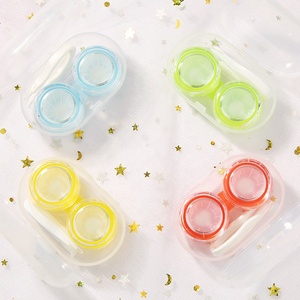
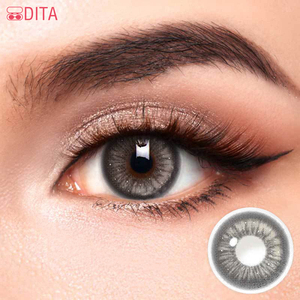
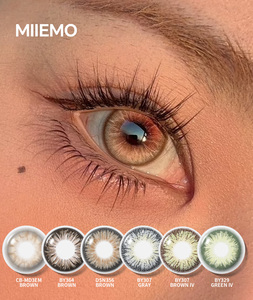
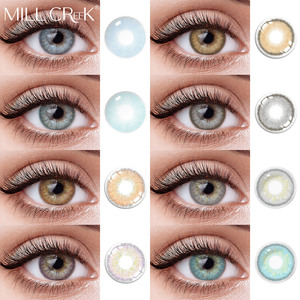
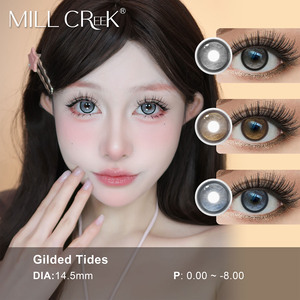
1. The Evolution of Private Label Colored Contact Lenses Sourcing
The global cosmetic contact lens market has undergone a paradigm shift. What was once predominantly a niche beauty novelty has matured into a multi-billion-dollar medical device sector driven by daily disposability, personal self-expression, and advanced ocular health standards. For optical retailers, pharmacy chains, beauty conglomerates, and direct-to-consumer (DTC) eyecare brands, partnering with a trusted private label colored contact lenses manufacturer & factory is no longer merely a purchasing decision—it is a core strategic lever for margin optimization, brand equity enhancement, and customer retention.
In mature markets across Europe, North America, and the Middle East, private label penetration in personal care and eyecare has accelerated rapidly. Retail buyers and procurement managers are bypassing traditional brand distributors in favor of direct factory partnerships. By establishing contract manufacturing contracts with ISO 13485 certified facilities, brands can achieve gross margins upwards of 65% to 80% while offering end-consumers premium, compliant, and beautifully designed lens products under their own trademark.
Procurement Insight: Information Gain for Eyecare Buyers
Success in private label cosmetic contact lenses hinges on balancing ocular biocompatibility with vibrant visual design. Leading factories utilize multi-layer micro-encapsulation (Sandwich Technology) to ensure zero direct pigment contact with the cornea, ensuring complete alignment with EU MDR (Medical Device Regulation 2017/745) and US FDA regulatory standards.
Key Market Growth Drivers for Contract Manufacturing
- Rising Demand for Cosmetic & Prescription Dual-Functionality: Modern consumers expect cosmetic enhancement (limbal ring enlargement, multi-tone color blending) seamlessly integrated with precise vision correction ranging from plano (0.00D) up to -10.00D.
- Shift Toward Daily Disposable Modalities: Single-use daily color lenses eliminate maintenance compliance issues, drastically reducing microbial keratitis risks while increasing re-order frequency for retailers.
- Custom Iris Pattern Personalization: Brands demand exclusive 1-tone, 2-tone, 3-tone, and 4-tone graphic prints tailored to local ethnic aesthetic preferences, from vibrant blue and emerald tones in Western markets to subtle hazel and dark-brown limbal rings in Asian and Middle Eastern regions.
2. Hydrogel vs. Silicone Hydrogel: Material Science & Manufacturing Technology
A critical technical evaluation for any procurement director involves choosing the optimal lens substrate material. As a premier contact lens OEM factory, we manufacture across both conventional Hydrogel (PolyHEMA) and high-transmissibility Silicone Hydrogel (SiHy) platforms. Understanding the physical chemistry of these hydrogels directly impacts your brand's wearability claims and shelf positioning.
Micro-Encapsulation Printing
Locked-in pigment technology coats non-toxic biocompatible color layers between hydrogel polymers, guaranteeing zero pigment leaching.
High Oxygen Flux (Dk/t)
Silicone hydrogel formulations deliver up to 120 Dk/t, maintaining corneal health and white, irritation-free eyes during extended wear.
Moisture-Lock Matrix
Integrated hydrophilic wetting agents (such as Hyaluronic Acid or NVP polymers) prevent lens dehydration and surface lipid deposition.
Technical Comparison of Private Label Lens Substrates
Selecting the right technical parameters ensures your custom contact lens line satisfies specific consumer pain points and price tier objectives:
| Material Parameter | PolyHEMA Hydrogel | Silicone Hydrogel (SiHy) | Target Retail Positioning |
|---|---|---|---|
| Water Content (%) | 38% – 58% | 40% – 48% | High water content for instant initial comfort vs balanced SiHy hydration. |
| Oxygen Transmissibility (Dk/t) | 18 – 28 Dk/t | 80 – 130 Dk/t | SiHy recommended for daily full-day wear (12+ hours). |
| Flexural Modulus (MPa) | 0.25 – 0.35 MPa (Ultra-Soft) | 0.45 – 0.65 MPa (Structural Memory) | Hydrogel offers supreme initial softness; SiHy offers easier handling. |
| Pigment Encapsulation Method | Double Sandwich Cast Molding | Surface Plasma Treated Polymerization | Both ensure 100% corneal protection with smooth edge profiles. |
| Recommended Replacement | Daily / Monthly Disposables | Daily / Monthly Premium Lines | Mass Market Beauty vs. Professional Optometry Chains. |
3. Key Future Procurement & Sourcing Trends (2025–2030)
To outshine competitors in organic search and retail shelf dominance, private label brand managers must align their product development roadmaps with upcoming industry macro-trends. Based on quantitative retail data and clinical trials, four major trends will dictate global contact lens procurement over the next decade:
Trend 1: Accelerated Adoption of Daily Disposable Packaging Solutions
Consumer preferences are shifting away from monthly lens care maintenance routines due to hygiene convenience. Procurement managers are increasing their allocation toward single-use daily blister packs. Our factory specializes in high-speed automated strip-blister packaging, delivering cost-effective 10-pack, 30-pack, and 90-pack retail box formats.
Trend 2: Eco-Friendly & Sustainable Packaging Innovations
Environmental governance is reshaping consumer purchasing decisions in Europe and North America. Modern eyecare brands are sourcing zero-plastic cardboard secondary packaging, soy-ink printed cartons, and lightweight foil blister pods that reduce plastic waste per box by up to 35%.
Trend 3: Smart Personalization & Hyper-Natural Iris Aesthetics
Heavy, artificial-looking opaque lenses are being replaced by subtle radial dot-matrix designs that mimic the intricate structure of the natural human iris. Advanced 3D digital color-mapping algorithms allow our R&D team to engineer custom shades—such as Honey Amber, Olive Green, Quartz Gray, and Hazel Blend—that seamlessly adapt across varied natural eye colors.
Trend 4: Regulatory Rigor & Supply Chain Transparency
With regulatory bodies enforcing strict oversight under the European Medical Device Regulation (EU MDR 2017/745), US FDA 510(k) clearances, and Saudi SFDA mandates, brands can no longer source from uncertified non-compliant factories. Traceability—from raw monomer distillation to final ethylene oxide or steam autoclave sterilization—is now mandatory for global market entry.
4. Strategic Factory Advantages: Why Partner With Us
As an international leader in OEM/ODM private label eyecare (with primary distribution and engineering facilities located at Faradaystraat 14, 6718 XT Ede, The Netherlands under kyralens Technology Co., Ltd.), our organization bridges the gap between high-volume manufacturing efficiency and European regulatory precision.
Full Regulatory Dossier Support
We provide comprehensive technical files, CE Certificates of Conformity, ISO 13485 audits, Free Sale Certificates (FSC), and lot analysis records for seamless market registration.
End-to-End Private Label Customization
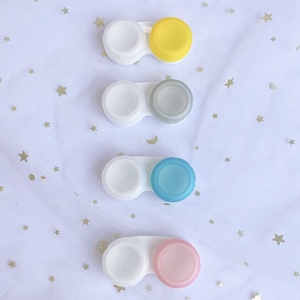
From custom blister foil printing and branded secondary paperboard cartons to matching lens cases, travel kits, and lubricating drops—we deliver total shelf-ready solutions.
Automated Vision Inspection (AOI)
100% of manufactured lenses undergo automated high-speed camera inspection to identify edge chips, micro-bubbles, pigment misalignments, and dimensional deviations.
Trusted by Global Retail Leaders
Our contract manufacturing capabilities serve top retail chains, health & beauty store networks, and pharmacy groups including Watsons, Rossmann, Kruidvat, Albert Heijn, Etos, and REWE.
Low MOQ Pilot Launches
Mitigate inventory risk with flexible minimum order quantities on initial SKU trials, allowing fast product-market fit validation before scaling to national rollouts.
Optimized Direct-Factory Margins
Direct B2B factory pricing removes intermediary distributor markups, maximizing corporate profitability and enabling aggressive competitive retail pricing.
5. Frequently Asked Questions (FAQ) for B2B Contact Lens Buyers
Below are authoritative responses to the primary technical, operational, and regulatory questions raised by corporate procurement officers, optical brand owners, and compliance heads.