Featured Wholesale Colored Contact Lenses & OEM Packaging Solutions
Explore our top-tier CE and ISO-certified soft cosmetic lenses, ready for private label customized branding and worldwide distribution.

Private Label Customized Brand Color Contact Lenses Factory Wholesale Fashion Natural Blue Soft Eye Colored Lens Contact
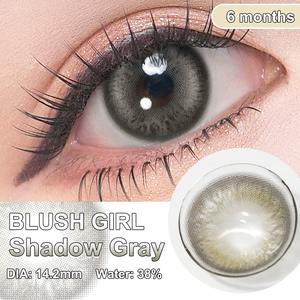
Free Shipping Eye Contact Lenses Magister Soft Lens Factory Price Cheap Lentilles De Lunettes New Color Gray Contact Lenses
American Flag Windsock Embroidered Stars 4th July Outdoor Hanging Stripes 350g Made in USA TOP FLAGSINC
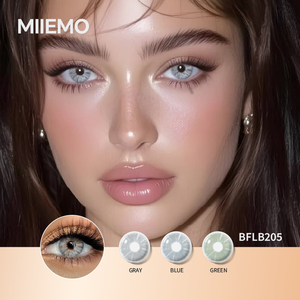
DSC Chinese Factory Wholesale Soft Blue Small Pupil Colored Contact Lenses ISO Certified 5 Year Expiration
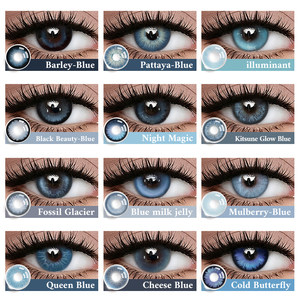
YITONGNIAN Wholesale Blue Colored Contact Lenses Yearly Disposable 14.5mm CE ISO13485 OEM Big Eyes Contact Lenses
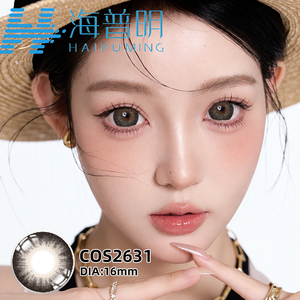
Wholesale High Quality Soft Cosmetic Colored Contact Lenses 16mm Yearly Disposable HEMA OEM ODM Factory Supplier for Resellers
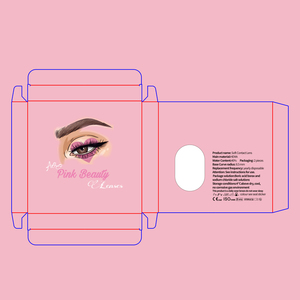
Eyeshare Custom Practical Colored Contact Lens Packing Box Contact Lenses Packaging Box Color Contact Lens Logo Custom

Ocre natural Eye Colored Contact Lenses 1-Year Use Softness 42% Water Content factory
The Strategic Procurement Guide for B2B Color Contact Lens Sourcing
An executive operational breakdown of manufacturing standards, polymer science, regulatory compliance, and private label growth strategies.
1. The Global Landscape of Wholesale Colored Contact Lens Manufacturing
The global cosmetic and corrective color contact lens market is experiencing an unprecedented structural shift. Driven by expanding omnichannel retail networks, beauty e-commerce, and rising demand for natural iris accentuation, global buyers—ranging from drugstore conglomerates and pharmacy chains to boutique beauty brands—are expanding their private label ocular lines. However, navigating the international supply chain demands a rigorous evaluation of manufacturer capabilities, material stability, and regional regulatory compliance.
Selecting top trusted wholesale colored contact lenses manufacturers and suppliers is no longer just about per-unit purchasing cost. Professional B2B procurement directors evaluate factories based on total cost of ownership (TCO), quality management systems (QMS), automated visual defect screening, and lot-level traceability. Modern contact lenses are classified as Class IIa or Class IIb medical devices depending on regional jurisdiction (such as the EU MDR 2017/745 or US FDA regulation). Consequently, working with certified OEM/ODM factories ensures seamless customs clearance, zero product recalls, and protected brand integrity.
2. Core Technical Specifications: Polymers, Permeability, and Geometry
When evaluating factory spec sheets, optical purchasing agents must evaluate three core pillars of lens chemistry and physical design:
Polymer Material Science
Traditional Poly-HEMA (Hydroxyethyl Methacrylate) offers exceptional physical stability and economical cost structures for daily, monthly, and yearly disposable color lenses. Advanced Silicone Hydrogel formulations deliver dramatically superior Oxygen Transmissibility (Dk/t), enabling extended wearing comfort without corneal hypoxia.
Water Content vs. Dk/t Balance
A common procurement misconception is assuming higher water content always equates to higher comfort. High water content hydrogel lenses (e.g., 58%) can draw moisture from dry eyes over long wear cycles. Optimal OEM color lens formulations balance 38% to 45% water content for structural durability and hydration retention.
Precision Edge Profile & BC
Automated cast molding technology ensures a uniform Base Curve (BC 8.5mm - 8.6mm) and Diameter (DIA 14.0mm - 14.5mm). Smooth rounded edge designs reduce palpebral conjunctival friction upon blinking, dramatically elevating wearer adaptation rates.
3. Technical Specification Matrix: Material & Replacement Cycle Comparison
To assist procurement managers in formulating their product portfolio strategy, the following technical visualization matrix compares the primary substrate materials used across wholesale OEM manufacturing lines:
| Material Category | Water Content (%) | Oxygen Permeability (Dk/t) | Primary Target Market | Color Printing Process | Regulatory Tier |
|---|---|---|---|---|---|
| Standard Poly-HEMA | 38% - 42% | 15 - 20 Dk/t | Fast Fashion, Costume, Budget Retail | Double-Layer Surface / Sandwich | CE / ISO 13485 |
| HEMA + NVP Copolymer | 45% - 55% | 22 - 28 Dk/t | Daily Cosmetic, Natural Iris Beauty | 3-Layer Sandwich Encapsulation | CE / ISO / GMP |
| Silicone Hydrogel (SiHy) | 40% - 48% | 80 - 120+ Dk/t | Premium Prescription & Premium Color | Micro-Dot Laser Printing (3-In-1) | FDA 510(k) / CE / MDR |
| Small Pupil Specialty Lens | 42% | 18 - 22 Dk/t | Cosplay, Natural Eye Color Transformation | Opaque Layering Tech | CE / ISO Certified |
Future Purchasing Trends in the Color Contact Lens Sector
Anticipating buyer preference evolution, environmental mandates, and technological innovations in bulk optical manufacturing.
1. Domination of Daily Disposable (1-Day) Formats
Consumer preferences are rapidly migrating from yearly and monthly disposables to 1-Day daily disposable colored lenses. Driven by heightened hygiene awareness and zero-maintenance convenience, retail buyers are expanding their daily SKU count. Manufacturing lines are heavily investing in ultra-high-speed automated sterile blister packaging lines to satisfy this volume growth.
2. Hyper-Realistic "No-Line" Iris Matrix Designs
Monolithic harsh limbal rings are being replaced by multi-tonal, semi-transparent 3-in-1 dot matrix printing. Advanced optical computer modeling simulates natural human iris radial striations, offering subtle color enhancement (such as Honey Amber, Natural Hazel, Hazelnut Grey, and Soft Sky Blue) suitable for workplace and everyday wear.
3. Sustainable Packaging & Eco-Friendly Blisters
Global optical retail conglomerates (e.g., Ahold Delhaize, Rossmann, REWE) are enforcing strict ESG procurement criteria. Forward-thinking manufacturers are adopting recyclable polypropylene (PP) blister cups, reduced foil thickness, and FSC-certified paper packaging boxes with bio-based soy inks.
Why Global Retail Leaders Partner With Us
Full-service private label eye care manufacturing, European distribution hub capabilities, and comprehensive regulatory clearance.
kyralens Technology Co., Ltd. — Your End-to-End Ocular Partner
Headquartered in Ede, The Netherlands (Faradaystraat 14, 6718 XT Ede, NL), kyralens Technology Co.,Ltd develops private label contact lenses, cosmetic colour lenses, lubricating eye drops, cleaning care solutions, storage cases, and reading glasses for tier-1 retailers worldwide. We manage the entire lifecycle: product parameter engineering, custom mold design, sterile cleanroom filling, localized multilingual packaging compliance, and EU-wide logistics replenishment.
Our production facilities operate under ISO 13485 Quality Management Systems with rigorous lot-traceability protocols and validated 5-year product shelf-life testing. Whether launching a focused pharmacy pilot or scaling a nationwide retail roll-out across Europe, the Middle East, and Asia, our structural expertise ensures zero operational friction.


Frequently Asked Questions for Wholesale & Private Label Buyers
Comprehensive answers to common questions regarding regulatory files, MOQs, packaging design, and sterilization protocols.
What is the standard OEM/ODM Private Label process for colored contact lenses? ▼
What technical certifications and quality documentation do you provide for customs clearance? ▼
How does the Sandwich Printing Process ensure ocular safety for cosmetic lens wearers? ▼
What are the typical Minimum Order Quantities (MOQ) and production lead times for private label orders? ▼
Can we combine colored contact lenses with lens care solutions and accessories in a single container? ▼
What is the shelf life of sealed wholesale colored contact lenses? ▼
Ready to Launch or Scale Your Private Label Color Lens Line?
Partner with an established European private label eye care developer. Contact our commercial engineering team today for factory pricing, sample kits, and customized brand proposals.