Featured Contact Lens Equipment, Optics & Finished Packaging
Explore our export-ready CE-marked contact lens product catalog, automated filling and cartoning lines, high-precision optical components, and blister packaging equipment targeted for Seattle distributors and brand owners.
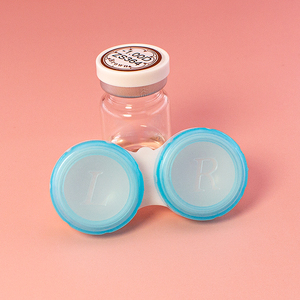
Injection Moulding Manufacturer Custom Plastic Parts Service Washer Contact Lens Box
Send an Inquiry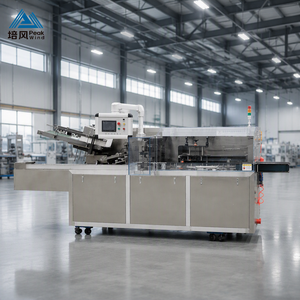
Professional Fully Automatic Large Capacity Aseptic Cartoner Machine for Contact Lenses with PLC Control
Send an Inquiry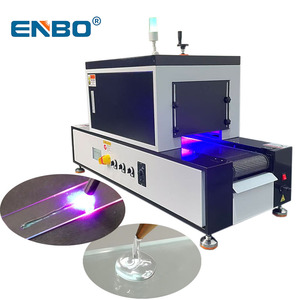
Compact UV LED Curing Conveyor System for Optical Glass Lens Manufacturing UV Adhesives Efficient Curing
Send an Inquiry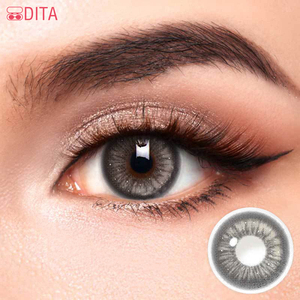
Contact Lenses Prescription Comfortable Contact Lenses Best-selling Contact Lenses Factory Wholesale
Send an Inquiry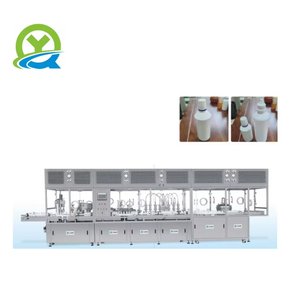
Electric Automatic Contact Lens Care Solution Production Line Filling Machine with Core Components Pump Gear Motor
Send an Inquiry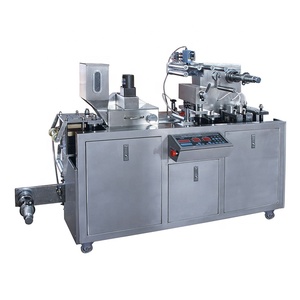
DPP80 Small Mini Automatic ALU-Plastic Contact Lenses Blister Packing Machine Factory Price Hot Sale
Send an Inquiry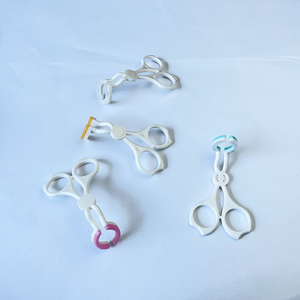
Factory New Case Contact Lenses Custom Contact Lens Case Contact Lenses Case Eye-opener Wearing Tool A-2
Send an Inquiry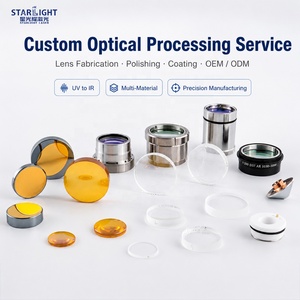
Custom Optical Components Manufacturing / Precision Optical Processing / Optical Coating Service
Send an InquiryCE Certified Contact Lens Manufacturing: Engineering Rigor & Quality Architecture
An in-depth technical report on automated hydrogel polymer synthesis, high-precision cast molding, aseptic filling automation, and compliance protocols governing global export to the Pacific Northwest.
Modern contact lens manufacturing bridges advanced optical engineering, polymer biochemistry, and ultra-precise micro-machining. For medical device distributors, optical chains, and private-label brand owners in Seattle, Washington, establishing a resilient, CE-compliant supply chain demands complete transparency into every stage of production. As global exporters operating under strict ISO 13485:2016 and EU Medical Device Regulation (MDR 2017/745) frameworks, our manufacturing facilities integrate state-of-the-art automation to ensure batches meet optical tolerance, oxygen permeability (Dk/t), and biocompatibility specifications.
1. Material Selection & Polymer Chemistry
The core performance of soft contact lenses relies on macromolecular chemistry. We utilize both traditional hydrogel monomers—such as Poly-HEMA (Hydroxyethyl Methacrylate)—and advanced Silicone Hydrogel (SiHy) fluorosilicone macromers. Silicone hydrogel formulations are essential for contemporary wearers, offering oxygen transmissibility (Dk/t) values exceeding 120 to 160 Dk/t, compared to traditional hydrogels which peak around 25-35 Dk/t.
Our raw material purification process filters out unreacted monomers, residual cross-linkers, and micro-particulates using high-performance liquid chromatography (HPLC) validation. This ensures minimal ocular irritation, long-lasting surface wettability via bonded hydrophilic agents (such as PVP or hyaluronic acid matrix embedding), and resistance to lipid/protein deposition.
2. Dual-Sided Precision Cast Molding Technology
While computer numerically controlled (CNC) lathe-cutting is ideal for specialized rigid gas permeable (RGP) or custom prosthetic lenses, mass-scale production of disposable daily, bi-weekly, and monthly soft lenses relies on Cast Molding. Our cleanroom facilities employ ultra-precise plastic molds manufactured via high-speed injection molding machines equipped with single-crystal diamond tool inserts.
| Manufacturing Parameter | Standard Lathe-Cutting | Advanced Cast Molding (Our Process) | Impact on End-User Experience |
|---|---|---|---|
| Base Curve (BC) Tolerance | ± 0.05 mm | ± 0.01 mm | Superior corneal fit and reduced lens movement on eye. |
| Center Thickness (CT) Control | ± 0.02 mm | ± 0.005 mm | Optimized oxygen diffusion and uniform structural stability. |
| Edge Profile Uniformity | Variable edge radius | Tapered micro-smooth edge | Eliminates foreign body sensation; maximizes wearing comfort. |
| Production Scalability | Low to Medium Yield | High Speed (>10M monthly) | Ensures consistent supply for high-volume Seattle importers. |
3. Automated Hydration, Extraction & UV LED Curing
Following UV photo-polymerization inside the male-female mold assembly, the monomer matrix undergoes controlled demolding. Lenses are then subjected to automated extraction and hydration lines. During this phase, organic solvents or excess unreacted monomers are washed away using multi-stage reverse osmosis (RO) ultra-pure water (WFI grade).
For custom optical glass components, specialized lens coatings, and auxiliary optical assemblies, integrated Compact UV LED Curing Conveyor Systems deliver narrow-spectrum UV radiation (365nm/395nm wavelength) to cure optical adhesives rapidly without causing thermal deformation to delicate lens substrates.
4. Aseptic Blister Packaging, Solution Filling & Terminal Sterilization
Contact lenses are encapsulated in medical-grade aluminum-plastic foil blister packs filled with buffered isotonic saline solution enriched with natural lubricating agents. Our continuous Automatic ALU-Plastic Blister Packing Machines (DPP Series) execute high-speed forming, precise liquid dosing, heat-sealing, and laser lot marking in a single integrated workflow.
Post-packaging, all sealed blister packages undergo moist heat terminal sterilization in industrial autoclaves at 121°C (250°F) for a validated dwell period under ISO 17665 standards. This guarantees a Sterility Assurance Level (SAL) of 10-6, providing absolute safety against bacterial endospores, fungi, and Acanthamoeba contamination.
CE Certification (MDR 2017/745) & ISO Standards Alignment
Navigating regulatory compliance is critical for Seattle-based ophthalmic importers, medical distributors, and retail chain procurement managers.
Entering the Pacific Northwest and broader US medical device market requires stringent documentation and quality management systems. Our manufacturing facilities are fully audited and certified under international medical frameworks, ensuring smooth cross-border clearance at the Port of Seattle and Tacoma hubs.
EU MDR 2017/745 Class IIa/IIb Certification
Our soft contact lenses and lens care accessories strictly adhere to the European Union Medical Device Regulation. CE certification under Notified Bodies demonstrates comprehensive Technical File documentation, Clinical Evaluation Reports (CER), and strict Post-Market Surveillance (PMS) systems.
ISO 18369 Ophthalmic Optics Compliance
All finished contact lenses are tested according to ISO 18369 standard test methods. We verify refractive power, base curve radius, diameter, light transmittance (including integrated UV-A and UV-B blocking filters), and extractable substances to ensure zero toxicological impact.
ISO 10993 Biocompatibility Validation
Our hydrogel materials undergo complete biological evaluation including cytotoxicity (ISO 10993-5), ocular irritation testing (ISO 10993-10), and systemic toxicity testing. Lenses are verified completely inert and non-irritating to human corneal epithelial cells.
Harmonized Audit Trails for US FDA 510(k)
We provide full Device Master Record (DMR) support, Design History Files (DHF), and Lot Traceability logs compatible with US FDA 21 CFR Part 820 Quality System Regulations (QSR), simplifying private-label registration for Washington State businesses.
Localized Application Scenarios in Seattle & the Pacific Northwest
Tailoring contact lens formulations, packaging designs, and optical parameters to match the environmental conditions and lifestyle trends of Greater Seattle residents.
Seattle presents a unique demographic and environmental landscape. Known as a world-leading technology hub housing major corporate campuses (including Amazon, Microsoft, and associated tech ecosystems), the regional population exhibits specific eye-care demands stemming from high visual work thresholds, prolonged digital device usage, and dynamic outdoor lifestyle habits.
1. Computer Vision Syndrome & Screen Fatigue Solutions
Seattle's tech workforce suffers elevated rates of digital eye strain, dry eye symptoms, and reduced blink frequencies. Our high-water-content hydrogel and high-Dk/t silicone hydrogel contact lenses integrate continuous moisture-retention agents (such as Hyaluronic Acid and Hyaluronate-infused matrix systems) that stabilize the pre-corneal tear film during 10+ hours of continuous digital screen interaction.
2. PNW Micro-Climates & Outdoor Active Wear
From misty coastal winds in Puget Sound to high-altitude sun exposure in the Cascade Mountains, Pacific Northwest outdoor enthusiasts require lenses with built-in Class 1 UV Protection (blocking >90% UVA and >99% UVB radiation). Our lenses offer secure centration and high dimensional stability under varying humidity levels, preventing dislodgement during hiking, skiing, and cycling.
3. Cosmetic & Natural Tint Trends in Urban Centers
In neighborhoods like Capitol Hill, Bellevue, and Downtown Seattle, demand for cosmetic color contact lenses leans toward natural, subtle iris-enhancing tones (e.g., hazel, warm honey, deep charcoal) rather than stark artificial shades. Our sandwich-printing color technology embeds non-toxic micro-pigments safely between hydrogel polymer layers, preventing direct pigment contact with corneal tissues.
Seattle Logistics & Port Clearance Advantage
Exporting directly to Seattle distributors via ocean vessels berth at Terminal 5 & Terminal 18 (Port of Seattle) or expedited air freight through Seattle-Tacoma International Airport (SEA). We provide pre-cleared customs documentation, master bill of lading (MBL) consolidation, temperature-monitored cold-chain shipping container options (maintaining 15°C to 25°C), and humidity control to protect blister foil seals against marine moisture damage during trans-Pacific transit.
Seattle & West Coast Contact Lens Industry Trends
Procurement strategies are shifting toward sustainable manufacturing, automated local fulfillment, and customized private-label brand equity.
Trend 1: Accelerated Shift Toward Daily Disposable Lenses
Driven by hygiene awareness and consumer convenience, Seattle optical chains report a steady year-over-year transition from monthly reusable lenses to single-use daily disposables. Our automated high-capacity manufacturing lines allow Seattle importers to source daily disposable lenses at competitive unit economics, enabling high-margin retail pricing models.
Trend 2: Eco-Conscious Packaging & Recyclable Materials
Washington State consumers prioritize environmental sustainability. To meet local expectations, our production lines support eco-friendly packaging options, including thinner foil blister lids, recyclable polypropylene (PP) blister cups, and FSC-certified outer paperboard cartons printed with non-toxic soy-based inks.
Trend 3: Private Label Branding for Regional Optical Chains & E-Commerce
Rather than relying solely on legacy national brands with slim profit margins, Seattle optometric groups and digital direct-to-consumer (D2C) startups are developing proprietary private-label eye-care lines. We provide comprehensive OEM/ODM services—ranging from custom box graphic design, private logo foil stamping, to tailored lens parameter selections (e.g., custom toric cylinder options and multifocal add powers).
Seattle Importer & Distributor Procurement FAQ
Technical, regulatory, and commercial responses tailored for procurement leads, optical buyers, and medical device importers in Washington State.
Why Global Importers & Seattle Brands Partner With Us
End-to-end manufacturing control, scalable automation, and dedicated international trade logistics.
Full Supply Chain Integration
From custom injection molding of lens care travel boxes to filling multi-purpose solution bottles and optical lens coating, we manage the entire value chain under one quality control system.
Automated In-Line Vision Inspection
High-resolution CCD optical camera inspection systems verify 100% of manufactured lenses for edge tears, micro-bubbles, power deviations, and foreign particulates prior to sealing.
Bespoke Private Label Graphic Engineering
In-house structural and graphic designers craft retail-ready, multilingual packaging customized for US FDA label regulations, barcode systems, and Seattle brand aesthetics.
Dedicated Export Logistics Management
Complete export clearance handling, FDA registration guidance, certificate of origin issuance, and door-to-door freight coordination directly to Washington State warehouses.
Partner with a Leading CE Certified Contact Lens Factory for Seattle
Whether you are seeking bulk contact lens supplies, custom private label manufacturing, or state-of-the-art automated filling and cartoning equipment, our engineering team is ready to support your business expansion.