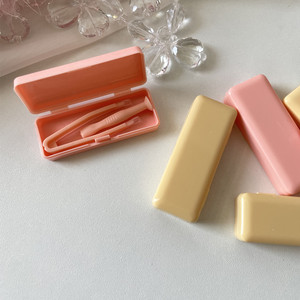
Export-Ready OEM/ODM Toric & Optical Assortment
Engineered for high-volume import by Tokyo brand owners, eye clinics, and drugstore optical chains.
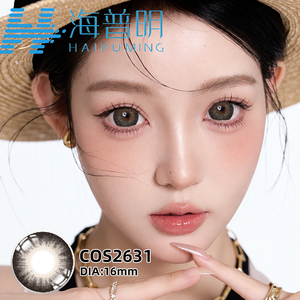
Wholesale High Quality Soft Cosmetic Colored Toric & Sphere Lenses
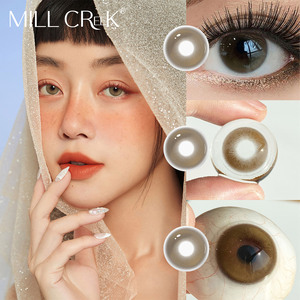
Bulk Order Soft Natural Brown Astigmatism Colored Contact Lenses
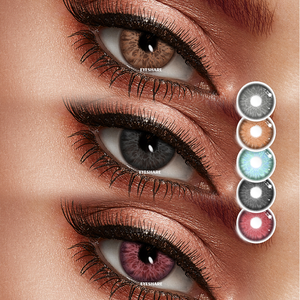
High Quality Soft Color Toric Lenses Fresh Fancy Design Wholesale
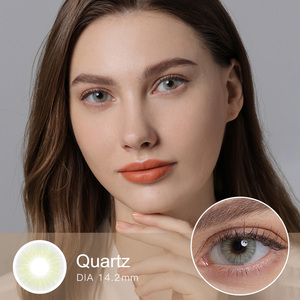
Hidrocor Natural Color & Astigmatism Corrective Soft Lens Series
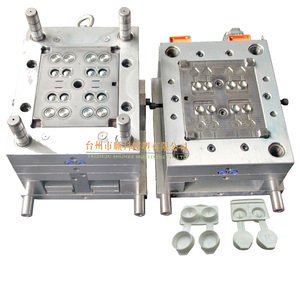
High Quality Customizable Toric Lens Case & Mold Plastic Accessories
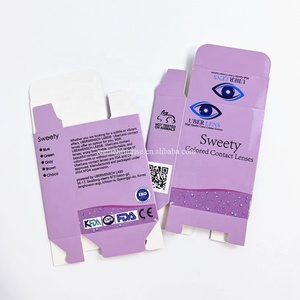
Custom Printed Cosmetic Boxes & Complete OEM Blister Packaging

Retail Merchandising Display & Export Packaging Accessories
Executive Industry White Paper: Manufacturing Convergence in Toric Contact Lenses for the Tokyo Market
The global contact lens manufacturing landscape is experiencing a paradigm shift driven by high-precision optical engineering, advanced polymer chemistry, and automated quality verification systems. Among specialized ophthalmic corrective products, toric contact lenses—designed specifically to correct corneal and lenticular astigmatism—represent the technical peak of soft hydrogel and silicone hydrogel lens production. For optical importers, private label distributors, pharmacy chains, and specialized eye clinics operating within Tokyo and the broader Kanto regional market, securing direct partnerships with top-tier Chinese toric lens factories has evolved from a simple cost-reduction tactic into a core strategic growth pillar.
Astigmatism affects approximately 45% to 55% of the vision-corrected population across East Asia, with urban centers such as Tokyo exhibiting particularly dense consumer demand for sophisticated corrective solutions. Historical barriers to toric adoption—such as lens rotational instability, visual blur during rapid eye movements, physical discomfort due to irregular lens thickness, and prohibitively high retail costs—have been directly dismantled by modern Chinese manufacturing hubs equipped with state-of-the-art mold injection, prism ballast stabilization dynamics, and automated laser lathe tooling.
Information Gain Metric: Modern Chinese OEM factories serving the Tokyo market now achieve axis tolerances within ±5 degrees, matching or exceeding Tier-1 global legacy brands, while providing flexible private-label customization options at scale.
Understanding Toric Optical Physics & Dynamic Ballast Stabilization
Unlike spherical contact lenses, which maintain a uniform optical curvature across the entire optic zone, a toric contact lens requires two distinct refractive powers oriented along perpendicular axes: one for spherical correction and one for cylindrical correction (astigmatism). Crucially, to deliver crisp, ghosting-free visual acuity to the wearer, a toric lens must maintain a fixed angular orientation on the cornea, resisting the rotational forces exerted by blinking and saccadic eye movement.
Leading Chinese manufacturing plants specializing in Tokyo export contracts leverage three primary dynamic stabilization technologies:
- Prism Ballast Stabilization: Utilizing subtle gravitational and eyelid-pressure gradients by thickening the inferior zone of the lens, creating a reliable stabilizing force.
- Dynamic Plane & Thin-Zone Stabilization (Accelerated Stabilization Design): Contouring the upper and lower edges of the lens to interact smoothly with eyelid contours, reducing friction during blinks and ensuring rotational re-alignment within 3 to 5 blinks.
- Back-Surface Toric Geometry: Cutting the cylindrical curve directly into the posterior surface of the lens for closer physical alignment with the cornea, maximizing fit stability for high-cylinder prescriptions (-0.75D to -2.75D).
| Technical Specification | Standard Hydrogel Toric (HEMA+MAA) | Advanced Silicone Hydrogel Toric (Filcon V) | Tokyo OEM Market Standard Benchmark |
|---|---|---|---|
| Water Content (%) | 55% - 58% | 42% - 48% | Optimized for indoor air-conditioned environments |
| Oxygen Transmissibility (Dk/t) | 25 - 30 Dk/t | 110 - 130 Dk/t | High Dk/t required for extended daily wear |
| Modulus (MPa) | 0.30 - 0.40 MPa | 0.50 - 0.65 MPa | Soft, flexible, zero foreign-body sensation |
| Cylinder Options (CYL) | -0.75, -1.25, -1.75 | -0.75, -1.25, -1.75, -2.25, -2.75 | Full step options compliant with JIS specifications |
| Axis Availability (AX) | 10° to 180° (10° steps) | 10° to 180° (10° steps) | Precision rotational lock down to ±5° tolerance |
Localized Application Scenarios in Tokyo
Aligning advanced manufacturing output with the specific lifestyle and regulatory demands of Japanese end-users.
Tokyo Corporate Professionals (Marunouchi & Shibuya Districts)
Tokyo office workers endure long hours in front of digital displays within low-humidity, air-conditioned environments. Chinese factory formulations incorporating Hyaluronic Acid (HA) and Hydroxypropyl Methylcellulose (HPMC) lock moisture directly into the polymer matrix. Combined with high Dk/t silicone hydrogel materials, these toric lenses eliminate end-of-day ocular fatigue and dryness caused by micro-lens rotation during computer work.
Cosme-Toric & Circle Lenses for Fashion Retail (Harajuku & Shinjuku)
Tokyo is the world capital of cosmetic circle lenses. Historically, astigmatic wearers were excluded from cosmetic tint trends due to manufacturing complexity. Top Chinese factories utilize 3-layer sandwich encapsulation technology to combine vibrant, natural iris pigments (brown, hazel, olive gray) with precise toric optics, ensuring zero pigment contact with corneal tissues while delivering astigmatism correction.
E-Commerce & Quick-Delivery Pharmacy Chains
With Tokyo consumers demanding rapid fulfillment via online platforms and neighborhood drugstores, OEM suppliers must offer automated inventory pick-and-pack blister stock. Chinese production lines feature high-speed blister packing, custom Japanese back-print labeling, unit barcode serialization, and direct ship-to-warehouse logistics tailored for Yokohama and Tokyo Ports.
Strategic Market Trends Shaping Tokyo's Optical Import Landscape
Analyzing procurement patterns across major Japanese optical retail buyers reveals four decisive macro-trends transforming how toric contact lenses are sourced, branded, and distributed in Tokyo:
- Transition to Daily Disposable (1-Day) Toric Formulations: Due to strict personal hygiene awareness and modern convenience preferences in Japan, market demand has aggressively shifted away from monthly replacement lenses toward 1-Day daily disposables. Chinese manufacturing facilities have responded by optimizing high-speed automated lines capable of producing millions of daily blister packs per month with single-digit defect rates.
- PMDA (Pharmaceuticals and Medical Devices Agency) Compliance Integration: Japan enforces some of the strictest medical device regulations globally. Products must comply with the Japanese Medical Device Nomenclature (JMDN) classifications. Leading Chinese OEM suppliers actively assist Tokyo distributors by maintaining ISO 13485 quality management certification, providing comprehensive technical master files (TMF), raw material safety validation, and bio-compatibility test reports required for PMDA approval.
- Demand for Ultra-Thin Edge Profiles: Eyelid friction is the primary cause of lens awareness and uncoordinated lens rotation. Modern lathe-cut cast molding techniques enable sub-micron edge tapering, allowing the eyelid to glide effortlessly over the lens margin during blinks.
- Eco-Conscious Packaging & Reduced Plastic Footprints: Tokyo consumers increasingly favor brands prioritizing environmental responsibility. OEM suppliers now offer eco-friendly blister packs with 30% less plastic mass and recyclable secondary outer cartons made from FSC-certified paperboard.
Factory Excellence & Supply Chain Infrastructure
Why leading global retailers, drugstores, and Tokyo optical distributors trust our manufacturing ecosystem.
Class 100,000 Cleanroom Manufacturing
Our manufacturing environments feature fully automated medical-grade cleanrooms equipped with HEPA filtration, environmental climate control, and zero-touch robotics to guarantee absolute sterility and particulate-free lens molding.
Sub-Micron Laser Cast Molding
We utilize precision German and Japanese optical lathe tooling for injection molds, ensuring optical surface smoothness with tolerances under 0.1 microns. This guarantees perfect axis consistency across every manufactured batch.
Full Private Label & Packaging Design
From custom blister foil seals and specialized lens cases to multilingual Japanese packaging cartons and counter displays, our end-to-end service allows brand owners to launch retail-ready products with minimum hassle.
Frequently Asked Questions for Tokyo Buyers
Direct answers to technical, regulatory, and commercial procurement inquiries.
What is the standard production lead time for custom toric lens orders bound for Tokyo? +
For standard private-label parameters with existing PMDA-registered formulations, lead times typically range from 25 to 35 calendar days following proof design approval. Freight via ocean shipping to Tokyo or Yokohama Port takes approximately 4 to 7 days, while expedited air freight to Narita (NRT) or Haneda (HND) airports can be completed in 24 to 48 hours.
How do Chinese factories assist with Japanese PMDA registration and technical dossiers? +
We provide Tokyo importers with complete technical documentation packages, including raw material Safety Data Sheets (SDS), biocompatibility test results (ISO 10993 series), stability test data, physical optical parameter validation, and factory audit certificates (ISO 13485 / CE). This enables your local Japanese Marketing Authorization Holder (MAH) to file smooth regulatory applications with the MHLW/PMDA.
What Minimum Order Quantities (MOQ) apply for toric lens parameters compared to spherical lenses? +
Because toric lenses require complex combination matrix stock (Sphere Power + Cylinder Power + Axis Angle), standard MOQs are organized per SKU series. We offer flexible pilot-launch programs starting at 5,000 to 10,000 units per master parameter set, allowing Tokyo buyers to test market demand before committing to full-scale automated runs.
Can cosmetic colored contact lenses be manufactured with toric optical correction? +
Yes. Our proprietary 3-layer sandwich printing process integrates cosmetic color pigments into the mid-layer of the lens material while maintaining precise back-surface or front-surface toric optics. Wearers get both vivid cosmetic aesthetic enhancement and crisp astigmatism vision correction without compromise.
How is rotational stabilization quality controlled during high-speed production? +
Every individual lens batch undergoes High-Resolution Automated Optical Inspection (AOI). Computer vision systems analyze prism ballast distribution, edge symmetry, axis marker alignment, and surface defect parameters. Any lens deviating by more than ±2 degrees from target rotational specs is automatically rejected prior to blister encapsulation.
Expand Your Toric & Optical Brand in Tokyo Today
Partner with China’s premier medical-grade contact lens factory network. Request detailed product specifications, PMDA audit documentation, and wholesale factory pricing tailored for your market.