Recommended OEM/ODM Contact Lens Catalog
Certified daily, monthly disposable, and cosmetic contact lens solutions tailored for distribution in Mumbai, Maharashtra, and across India.
Executive Summary: The Operational Imperative of Factory Audits for the Mumbai Market
Mumbai stands as the central nerve center for India’s optical trade, handling over 40% of the nation’s imported ophthalmic devices through the Jawaharlal Nehru Port Trust (JNPT) and Chhatrapati Shivaji Maharaj International Airport air cargo hubs. For optical brand managers, chain store buyers (operating across locations like Bandra, South Mumbai, and Dadar), and wholesale distributors operating in Kalbadevi, procuring contact lenses from overseas OEM/ODM factories carries immense regulatory and commercial responsibility.
Contact lenses are classified as Class B Medical Devices under India’s Central Drugs Standard Control Organization (CDSCO) Medical Devices Rules (MDR 2017). Importing sub-standard lenses into Mumbai without conducting rigorous manufacturing facility audits exposes brands to severe financial liabilities, product recall orders, custom clearance seizures by Indian Customs, and irreparable reputation damage caused by adverse ocular events such as corneal hypoxia or microbial keratitis.
SEO Information Gain Insight: An on-site factory audit for Mumbai-bound contact lenses is not merely an administrative checkbox. It is an engineering-level verification of cleanroom bioburden levels, automated optical centration tolerances, monomer leaching profiles, and blister package seal integrity designed to survive Mumbai’s extreme tropical humidity during storage and transit.
The 6-Pillar Technical Audit Blueprint for Contact Lens Manufacturers
When evaluating an international contact lens factory supplying the Mumbai and broader Indian market, lead auditors must systematically inspect six core manufacturing pillars to ensure compliance with ISO 13485:2016, US FDA QSR, and CDSCO requirements.
Verify ISO Class 8 (or Class 7 in core filling lines) environmental monitoring. Check positive differential pressure, airborne particle limits (<3,520,000 particles/m³ at 0.5µm), and HEPA filter integrity records.
Audit high-speed automated wet cast molding machines. Inspect female and male optical core insert tolerances (micrometric surface finish), ensuring base curve (BC) variance stays within ±0.05mm.
Examine UV-curing thermal cycles for HEMA and Silicone Hydrogel formulations. Ensure solvent extraction processes eliminate residual unreacted monomers, photoinitiators, and cytotoxicity risks.
Verify 100% inline Machine Vision Automated Optical Inspection (AOI). Ensure automatic rejection of lenses with edge tears, micro-bubbles, peripheral inclusions, or printing misalignments.
Audit steam autoclave terminal sterilization cycles (121°C for 20 mins). Evaluate aluminum foil blister heat-sealing integrity and burst pressure strength to handle sea transport.
Inspect the plant's Device Master File (DMF), Plant Master File (PMF), Free Sale Certificate (FSC), ISO 13485 certificate, and batch release records required for Indian Form MD-14 import licensing.
Factory Audit Inspection Thresholds (Quantitative Pass/Fail Parameters)
| Audit Parameter | Target Inspection Standard | Permissible Tolerance | Rejection Criteria |
|---|---|---|---|
| Base Curve (BC) Accuracy | 8.60 mm standard | ±0.05 mm | > 0.10 mm variance (causes ocular discomfort) |
| Diameter (DIA) Tolerance | 14.20 mm / 14.50 mm | ±0.10 mm | Mismatch leading to limbal ring compression |
| Center Thickness (CT) | 0.07 mm @ -3.00D | ±0.01 mm | Inconsistent oxygen transmissibility ($Dk/t$) |
| Color Pigment Encapsulation | Sandwich Micro-coating | Zero surface bleed | Pigment detected on anterior/posterior surface |
| Saline Solution Bioburden | Sterile Isotonic Buffered Saline | 0 CFU / 100 mL | Any microbial contamination pre/post autoclave |
| Foil Peel Strength | Heat sealed blister pack | > 12 N / 15mm | < 8 N / 15mm (risk of fluid leakage in shipping) |
Localized Application Scenarios in the Mumbai Metropolitan Region
Mumbai’s microclimate and demographic diversity present unique operational challenges for contact lens performance. Evaluating how manufactured lenses behave in local Mumbai conditions is vital for brand survival.
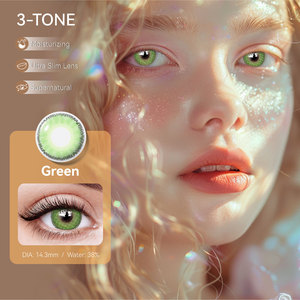
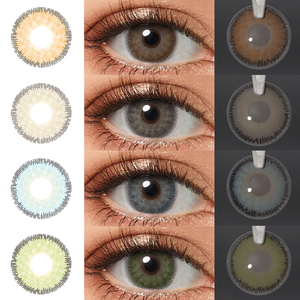
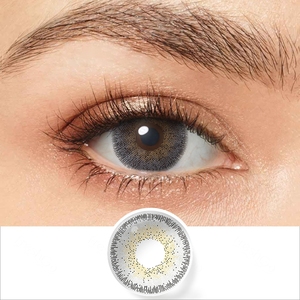
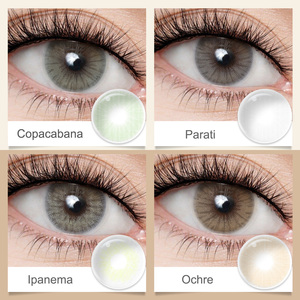
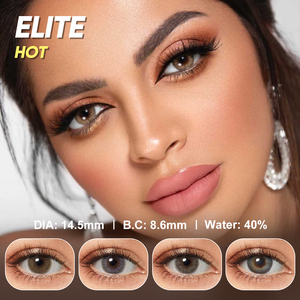
Shoppers in Bandra West, Lower Parel, and South Mumbai demand premium cosmetic color contact lenses with complex, multi-tone designs (3-tone hazel, grey, and olive shades). Factory audits must verify that pigment encapsulation (Sandwich Technology) is flawless so that high-pigment lenses maintain optical clarity under studio lighting and daily wear.
Wholesalers in Kalbadevi distribute across Maharashtra, Gujarat, and Goa. They demand high cost-to-performance ratio 1-Year and Monthly hydrogel contact lenses with extended shelf-life (5 years). Audits must ensure blister packaging foil can withstand humid warehouse conditions without delamination.
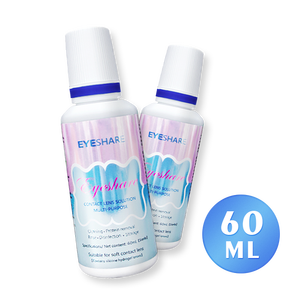
Mumbai commuters move constantly between outdoor coastal humidity (80%+) and intensely air-conditioned corporate offices in BKC (Bandra Kurla Complex). Lenses with poor water retention cause dry-eye symptoms. Audits must assess material wetting agents (e.g., Hyaluronic Acid additives in saline solution).
Market Trends Driving Contact Lens Sourcing for Mumbai Buyers
Understanding shift patterns in Indian consumer behavior helps OEM/ODM buyers select factory lines that match future market expansion:
Urban Mumbaikars are rapidly migrating from monthly to 1-Day daily disposable contact lenses driven by hygiene awareness, eliminating lens case cleaning solutions altogether.
Direct-to-Consumer eyewear platforms headquartered in Mumbai and Gurugram require quick-turnaround OEM manufacturing with custom-branded blister foil and aesthetic rigid paper boxes.
Cosmetic and prescription buyers are upgrading from standard HEMA hydrogel to high-oxygen transmissibility ($Dk/t > 100$) Silicone Hydrogel materials for extended daily comfort.
Enterprise Strengths: Why Partnering with Kyralens Ensures Audit Success
As a global developer and wholesaler of private-label eye care products, kyralens Technology Co., Ltd. bridge the gap between high-tech manufacturing plants and international retail chains.
Full compliance documentation including Device Master Files (DMF), Plant Master Files, CE 2797 certificates, and Free Sale Certificates for swift Indian registration.
Advanced multi-layer color printing seals pigments safely inside the hydrogel matrix, guaranteeing zero direct contact between dye and human corneal tissue.
From custom diopter matrix design (-0.50D to -10.00D) to blister pack artwork and multilingual outer carton box printing customized for the Indian market.
Partnered with world-leading drugstores and pharmacy chains (such as Watsons, Rossmann, Kruidvat, and Albert Heijn), guaranteeing supply chain stability.
Frequently Asked Questions (FAQ) for Mumbai Contact Lens Buyers
Answers to critical regulatory, quality control, and logistics queries encountered by importers serving Maharashtra and India.
What CDSCO licenses are required to import contact lenses into Mumbai, India?
How does Mumbai's coastal climate affect contact lens packaging seal requirements?
What is the distinction between Sandwich Printing and Surface Printing in color lenses?
What are the typical Minimum Order Quantities (MOQs) for OEM private label contact lenses?
How do automated visual inspection systems (AOI) work during contact lens manufacturing?
What lead time should Mumbai distributors anticipate for custom OEM production and sea freight?
Ready to Audit & Source Contact Lenses for Mumbai?
Connect with our senior regulatory and manufacturing specialists to request sample kits, factory audit dossiers, CDSCO registration guidance, or custom OEM quotations.
Get a Quote