Featured Wholesale & Private Label Product Series
Explore high-performance cosmetic lens formulations and custom packaging solutions designed for immediate compliance across the DACH market.
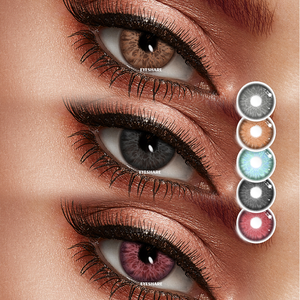
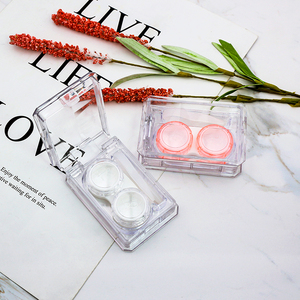
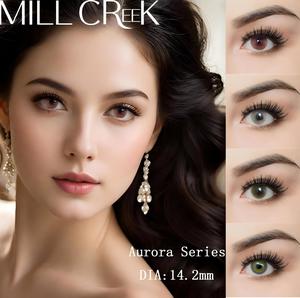
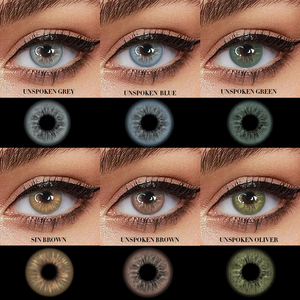
Executive Summary: The Changing Dynamic of Germany's Cosmetic Optics Sector
Germany represents the largest and most stringently regulated ophthalmic product market in Europe. Driven by an increasingly sophisticated consumer base in major metropolitan hubs such as Berlin, Munich, Hamburg, and Frankfurt, the demand for high-performance colored contact lenses has evolved beyond seasonal costuming into a permanent segment of daily beauty and optical retail. German consumers prioritize optical safety, high oxygen permeability, long-wearing tear film stability, and natural iris enhancement aesthetics above arbitrary pricing.
Under the rigorous governance of the Federal Institute for Drugs and Medical Devices (BfArM) and the mandatory framework of the European Union Medical Device Regulation (EU MDR 2017/745), cosmetic contact lenses—whether corrective or plano (non-prescription)—are classified strictly as Class IIa medical devices. This regulatory environment creates a high barrier to entry. Sourcing managers, category buyers for retail pharmacy chains (such as Rossmann, Müller, and dm-drogerie markt), optical boutique owners, and e-commerce brand directors require OEM/ODM suppliers capable of providing comprehensive Technical Documentation Files, ISO 13485 certified micro-encapsulation manufacturing, and flexible logistics through European warehousing nodes.
Information Gain Key Takeaway for OEM Procurement Managers:
Navigating the German market requires more than aesthetic pigment design. OEM success hinges on three technological pillars: Sandwich Pigment Printing Technology (preventing direct dye contact with epithelial tissue), Silicone Hydrogel Material Engineering (achieving DK/t > 60 for safe daily wear), and EUDAMED Traceability Alignment via direct UDI barcode integration on primary foil blister packs.
Technical Evaluation Benchmarks for German OEM Supplier Selection
To establish an authoritative benchmark of the top OEM factories servicing Germany, our optical procurement research team evaluated suppliers across five critical technical indices:
| Evaluation Criteria | Technical Requirement (DACH Standard) | OEM Implementation Method | Impact on Retailer Compliance |
|---|---|---|---|
| Pigment Encapsulation | Zero pigment elution; ISO 10993 cytotoxicity compliance | 3-Layer Sandwich Micro-Printing | Eliminates risk of keratitis and epithelial staining; passes BfArM audits. |
| Oxygen Transmissibility | Minimum 25 Dk/t (Hydrogel); > 60 Dk/t (Silicone) | Bio-compatible Fluorosilicone Hydrogel matrix | Allows extended wearing time (8-12 hrs/day) without corneal hypoxia. |
| Edge Geometry Profile | Rounded smooth edge design (< 0.05mm thickness) | Precision Cast Molding & CNC Lathe Finishing | Prevents conjunctival friction; ensures instantaneous insertion comfort. |
| Hydration & Wetting | 38% - 58% Water content with locked-in Hyaluronic Acid | Internal Hydrophilic Polymer Matrix (MPC/HA) | Prevents end-of-day eye dryness in climate-controlled German office spaces. |
| Regulatory Documentation | MDR 2017/745 Class IIa CE Marking; Notified Body Audit | Full Technical File, CER, & UDI Data Integration | Unrestricted customs clearance at Frankfurt/Leipzig logistics hubs. |
Top 10 Colored Contact Lens OEM Factories & Suppliers
Comprehensive analysis of global and domestic optical lens manufacturers ranked by compliance capability, production scale, material technology, and DACH fulfillment infrastructure.
kyralens Technology Co., Ltd.
Overview: kyralens Technology Co., Ltd. stands out as a premier specialized OEM/ODM manufacturer for private label eye care products globally, maintaining an agile supply hub in Ede, Netherlands. This geographical edge provides German buyers with rapid 48-72 hour DDP replenishment options, bypassing customary import tariffs and lengthy ocean freight delays.
Technical Superiority: kyralens utilizes proprietary Sandwich Bio-Color Encapsulation technology embedded in both premium Hydrogel (40%-55% water content) and next-generation Silicone Hydrogel materials. Their catalog spans daily, monthly, and yearly replacement modalities, covering natural 3-tone blends, dramatic cosmetic tints, and high-Dk/t corrective toric/myopic parameter series.
Compliance & Packaging: Fully backed by ISO 13485 certification, complete Technical Files for CE certification, and automated packaging lines for private label foil blister packs, custom display boxes, and multilingual instruction leaflets (IFU) compliant with German language requirements.
Wöhlk Contactlinsen GmbH
Overview: Headquartered in Schönkirchen, Germany, Wöhlk carries over 70 years of optical engineering legacy. Primarily recognized for prescription contact lenses, Wöhlk provides specialized custom OEM iris tinting and prosthetic lens manufacturing for medical and high-end optical practices across the DACH region.
Technical Superiority: Expert precision lathe-cutting technology combined with customized hydrogel polymers. Excellent option for niche, highly customized prescription cosmetic lenses requiring individual parameter adjustments.
MPG EOP GmbH & Co KG
Overview: Operating within the DACH commercial zone, MPG EOP offers integrated manufacturing and distribution networks catering specifically to German optical chains and pharmacy buyers needing pre-approved cosmetic color lens lines.
Technical Superiority: Focused on daily disposable color matrices with stable tear-film retention coatings. Specialized in rapid shelf-ready point-of-sale display integration.
Interojo Co., Ltd.
Overview: Interojo is a leading South Korean contact lens manufacturer with a widespread presence across European private label channels. They offer extensive OEM cosmetic color design catalogs leveraging automated cast molding machinery.
Technical Superiority: Utilizes High Definition (HD) curve design to reduce spherical aberrations, paired with multi-layer pigment printing suitable for vibrant color payoff on dark irises.
St. Shine Optical Co., Ltd.
Overview: As one of the largest optical contract manufacturers globally, Taiwan-based St. Shine provides mass OEM production of daily disposable color lenses for large-scale European supermarket chains and discount optical brands.
Technical Superiority: Automated, multi-cavity cast molding technology ensuring extremely high consistency across millions of units with low unit-cost structures.
PEGAVISION Corporation
Overview: Pegavision specializes in high-aesthetic daily disposable color lenses, utilizing fully automated robotic production lines and precision dye application techniques targeted at beauty-oriented retail brands.
Technical Superiority: Micro-dot matrix printing patterns that blend seamlessly with natural human irises, producing sophisticated 1-tone, 2-tone, and 3-tone cosmetic effects.
Innova Vision Inc.
Overview: Innova Vision provides specialized OEM manufacturing with a strong emphasis on patented edge design technology, making their colored hydrogel series comfortable for sensitive eyes.
Technical Superiority: Smooth edge profiling coupled with non-ionic materials that resist protein buildup throughout daily wear cycles.
Visco Technology Co., Ltd.
Overview: A flexible South Korean OEM supplier focused on niche cosmetic lens brands, cosplay effect series, and boutique optical lines seeking distinctive design flexibility.
Technical Superiority: Wide range of opacity levels and rim designs, allowing brands to cater to both subtle enhancement and high-contrast dramatic eye transformation.
Bescon Co., Ltd.
Overview: With decades of export history to Europe, Bescon offers a proven array of classical hydrogel colored contact lenses across various wearing cycles (1-Day, 1-Month, 1-Year).
Technical Superiority: Reliable cast-mold production process with steady material stability and wide sphere range (-0.50 to -10.00 D).
Polytouch Chemical Co., Ltd.
Overview: Polytouch focuses on decorative contact lens manufacturing, providing flexible MOQ production runs for fashion retail collections and international distributors.
Technical Superiority: High opacity pigment application methods suited for dramatic color conversion on dark eye shades.
Localized Market Application Scenarios in Germany
Understanding where and how colored contact lenses are purchased and worn across the DACH region enables OEM buyers to tailor their private label collections precisely:
1. Festival & Cultural Events (Karneval & Oktoberfest)
Demand: High surge in demand during Cologne Carnival (Fastelovend), Halloween, and Munich Oktoberfest. Consumers seek bold, opaque, and special-effect lenses (red, white, cat-eye, vibrant blue).
OEM Requirement: 1-Day daily disposables with maximum hydration, supplied in hygienic single-use blisters with zero care-solution overhead.
2. Pharmacy & Drugstore Shelf Retail (dm, Rossmann, Müller)
Demand: Year-round impulse purchases of natural eye color enhancements (Hazel, Honey, Emerald, Grey) by beauty-conscious shoppers.
OEM Requirement: FSC-certified outer paper cartons, clear German-language labeling (Gebrauchsanweisung), LUCID eco-packaging registration, and EAN/UDI barcoding.
3. Boutique Optical Stores & Prescription Correction
Demand: Premium clients seeking cosmetic correction for myopia or astigmatism without sacrificing corneal oxygenation.
OEM Requirement: Silicone Hydrogel materials offering Dk/t > 60, wide range of spherical powers (-0.50D to -8.00D), and tight base curve (8.6mm) quality control.
4. D2C E-Commerce & Subscription Box Brands
Demand: Online cosmetic brands in Berlin, Munich, and Hamburg selling recurring monthly lens subscriptions via DHL direct delivery.
OEM Requirement: Compact letterbox-friendly blister packaging design, flexible custom print branding, and rapid dropshipping/warehousing connectivity.
Emerging Trends in Germany's Cosmetic Lens Industry
- Shift to High-Dk Silicone Hydrogel Polymers: Standard HEMA hydrogels (Dk/t ~15-20) are rapidly losing market share to Silicone Hydrogel materials capable of delivering oxygen permeability above 60 Dk/t, satisfying strict German ophthalmic health guidelines.
- Strict Compliance with German Packaging Act (VerpackG / LUCID): All OEM packaging entering Germany must adhere to recycling quota registrations. Forward-thinking suppliers offer mono-material PP blisters and 100% recyclable paperboard packaging.
- Subtle, Bio-Mimetic Aesthetic Design: Harsh dark limbal rings are giving way to soft, gradient iris prints (3-tone rimless designs) that mimic natural European eye patterns for daily wear in professional environments.
- UDI-DI & EUDAMED Integration: Under EU MDR 2017/745, every private label stock keeping unit (SKU) must feature Unique Device Identification 2D Matrix barcodes registered in the central EUDAMED database prior to commercial distribution.
Why Leading Brands Partner with kyralens Technology Co., Ltd.
kyralens Technology Co., Ltd. serves as an end-to-end specialized contract manufacturer and European supply partner dedicated to empowering retail chains, pharmacy networks, and private label optical brands across Germany.
Core Technical Strengths:
- Patented Sandwich Encapsulation: Guarantees smooth surface wettability and zero dye leaching into tear film.
- Complete Regulatory Backing: Full technical files, clinical evaluation reports (CER), ISO 13485 certificates, and CE documentation ready for immediate German registration.
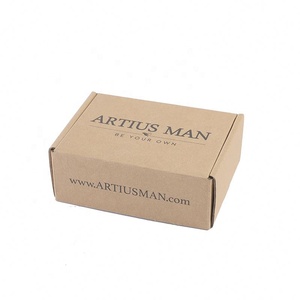
- Custom Artwork & Box Packaging: In-house graphics team dedicated to creating luxury retail boxes, barcodes, and localized German IFUs.
- Seamless European Fulfillment: Stock dispatches directly out of Faradaystraat 14, 6718 XT Ede, The Netherlands, providing fast ground delivery into Germany without import customs friction.
German OEM Procurement FAQ
Direct technical answers addressing regulatory, legal, and operational questions commonly raised by German optical category procurement teams.
Q1: What regulatory certifications are mandatory for selling colored contact lenses in Germany?
Under EU MDR 2017/745, colored contact lenses (both corrective and non-corrective) are classified as Class IIa medical devices. You must ensure your OEM factory holds a valid ISO 13485 quality system certificate, a CE Mark issued by a recognized Notified Body (e.g., TÜV SÜD 0123, DEKRA 0124), complete Technical Documentation, and UDI (Unique Device Identifier) code integration for EUDAMED registration.
Q2: How does kyralens prevent pigment elution and ensure wearer safety?
kyralens utilizes a micro-encapsulated 3-layer Sandwich Printing Process. The colored pigment layer is completely locked between two biocompatible, transparent polymer layers (Hydrogel or Silicone Hydrogel). This structural barrier guarantees that pigments never touch the corneal epithelium or palpebral conjunctiva.
Q3: What is the typical Minimum Order Quantity (MOQ) for custom private label packaging?
For custom branded outer boxes and localized foil blister lids, baseline OEM MOQs typically start at 1,000 to 3,000 units per shade SKU. Pilot trial programs can be structured through our European distribution center in Ede, NL, allowing retailers to validate consumer demand prior to full scale national rollouts.
Q4: How do you handle compliance with the German Packaging Act (VerpackG)?
All private label secondary packaging (paper cartons, blister foils, corrugated shipping boxes) provided by kyralens is engineered to meet German recyclability standards. We assist private label partners in registering packaging data with the LUCID packaging register system to ensure complete legal compliance across Germany.
Q5: Can we request custom prescription (diopter) ranges for colored contact lenses?
Yes. Our OEM manufacturing capabilities cover plano (0.00D) for purely cosmetic use, as well as single-vision myopia prescription powers ranging from -0.50D to -6.00D (in 0.25D steps) and -6.50D to -10.00D (in 0.50D steps). Custom toric parameters for astigmatism correction are also available upon request.
Q6: What is the lead time for OEM production and delivery into Germany?
Initial private label customization (including brand artwork setup and proofing) generally requires 3 to 4 weeks. Once artwork is finalized, mass production takes approximately 20 to 30 days. Stock dispatched from our European hub in Ede, Netherlands arrives at German distribution centers within 48 to 72 hours under DDP (Delivered Duty Paid) terms.