Featured FDA-Compliant Contact Lenses & Care Systems
Engineered for optical chains, healthcare retailers, and ophthalmic practices across Sydney and New South Wales. Fully compliant with US FDA 510(k) and Australian TGA standards.
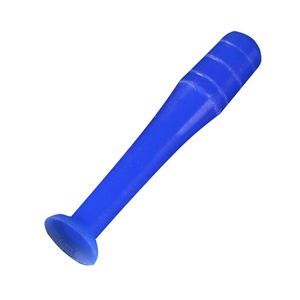
Orthokeratology Silicone Suction & Hygiene Care Set
• Ergonomic Non-Slip Applicator
• Autoclave-Sterile Packaging
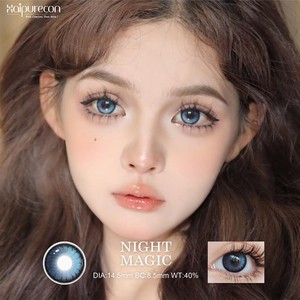
Haipurecon Premium Soft Hydrogel Daily Contact Lenses
• Water Content: 55% H2O
• Class 2 UV Blocking Protection
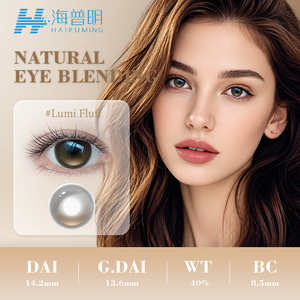
Fixed-Axis Highlight Brown Daily Disposable (OEM HEMA)
• Micro-Encapsulated Pigment Matrix
• Anti-Rotation Stabilization Technology
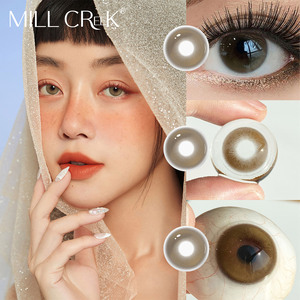
Bulk Soft Natural Brown Colored Contact Lenses
• Biocompatible Hydrogel Polymer
• Private Label Retail Packaging Ready
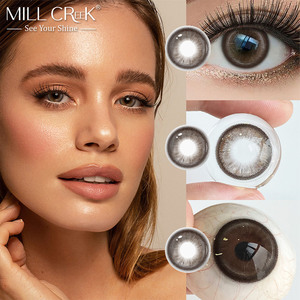
Bulk Natural 4-Shade Yearly Disposable Cosmetic Lenses
• Lathe-Cut Precision Optics
• OEM/ODM Custom Box Branding
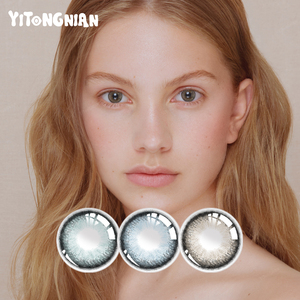
YITONGNIAN Series Hazel Tone Enhancing Contact Lenses
• Smooth Edge Profile for Comfort
• ISO 13485 Certified Production
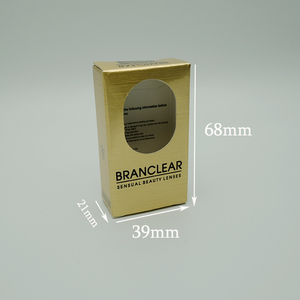
New Natural Look 3-Tone Soft Contact Lenses
• Moisture Retentive Hyaluronic Acid
• FDA 510(k) Master File Clearance

Integrated B2B Prescription Ordering & Inventory App
• Real-Time Sydney Stock Tracking
• Automated Customs & Logistics EDI
1. Executive Market Report: Sourcing FDA-Approved Contact Lenses in Sydney
The Sydney ophthalmic and optical retail landscape in New South Wales (NSW) represents one of the most sophisticated, highly regulated eye-care markets in the Southern Hemisphere. As consumer demand surges across Sydney CBD, Parramatta, Chatswood, and the Eastern Suburbs for both corrective vision hydrogels and aesthetic cosmetic lenses, optical store operators, pharmacy chains (such as Chemist Warehouse, Priceline), and independent optometry practices face a dual challenge: ensuring strict medical compliance under the Therapeutic Goods Administration (TGA) while sourcing cost-effective, high-transmissibility polymers from global FDA 510(k) approved contact lens manufacturers.
In Australia, contact lenses are classified as Class IIa Medical Devices under the Therapeutic Goods (Medical Devices) Regulations 2002. Consequently, procurement directors cannot simply rely on generic wholesale suppliers. To enter the Sydney market legally and retain long-term brand equity, suppliers must demonstrate a complete chain of custody, incorporating ISO 13485:2016 quality management certification, United States Food and Drug Administration (US FDA) 510(k) premarket clearance, and valid Australian Register of Therapeutic Goods (ARTG) listings.
Sydney Climate Challenge: High UV & Coastal Wind
Sydney experiences intense summer solar radiation (UV Index reaching 11-12+). FDA-approved suppliers must provide Class 1 UV blocking filters (absorbing >90% UVA and >99% UVB) integrated into the silicone matrix.
CBD Digital Eye Strain & Office Microclimates
Over 68% of Sydney office workers report dry eye symptoms due to continuous air conditioning. Lenses require advanced non-ionic polymers with low dehydration rates and surface wetting agents like PMPC or Hyaluronic Acid.
2. Regulatory Framework: FDA 510(k) Clearance vs. Australian TGA Compliance
For Sydney-based buyers, understanding how US FDA approval translates to Australian TGA registration is essential. US FDA 510(k) clearance acts as the gold standard for material safety, biocompatibility (ISO 10993 testing), toxicological profiles, and sterilisation validation (SAL 10⁻⁶). The TGA utilizes FDA approval documentation through international assessment pathways to expedite ARTG inclusion.
| Regulatory Standard | Jurisdiction | Classification | Key Testing Benchmarks | Impact on Sydney Importers |
|---|---|---|---|---|
| US FDA 510(k) | United States | Class II (Premarket) | Dk/t Oxygen Permeability, Cytotoxicity, Physico-chemical Stability | Mandatory baseline for premium global sourcing and trust. |
| TGA ARTG Listing | Australia (NSW) | Class IIa Medical Device | Essential Principles Checklist, GMDN Code 47884, Australian Sponsor Labeling | Legal requirement to sell or distribute anywhere in Australia. |
| CE Mark (MDR 2017/745) | European Union | Class IIa / IIb | Clinical Evaluation Reports (CER), Post-Market Surveillance (PMS) | Accepted by TGA as comparable overseas conformity assessment. |
| ISO 13485:2016 | Global Standard | Quality System | Cleanroom Class 100,000 (ISO 8), Bioburden Control, Batch Traceability | Ensures every blister pack meets zero-defect optical standards. |
3. Top 10 FDA-Approved Contact Lens Manufacturers & Suppliers for Sydney
The following comparative evaluation ranks the leading FDA-cleared manufacturers supplying hydrogel, silicone hydrogel, and cosmetic contact lenses to distributors and optical chains in Sydney, Australia. Criteria include polymer engineering, oxygen transmissibility ($Dk/t$), OEM private-label flexibility, and freight efficiency to Sydney Kingsford Smith Airport / Port Botany.
| # | Manufacturer / Supplier | Primary Material Focus | Dk/t Rating | FDA 510(k) Status | Sydney B2B Suitability |
|---|---|---|---|---|---|
| 1 | kyralens Technology Co., Ltd. | Silicone Hydrogel & Natural Cosmetic Lenses | 125 - 147 Dk/t | Cleared & Verified | Best Overall Private Label: Complete turn-key solution, low MOQ, full TGA support dossiers. |
| 2 | Johnson & Johnson Vision | Senofilcon A / Etafilcon A | 147 Dk/t | Cleared | High brand recognition; strict localized retail price controls. |
| 3 | CooperVision Australia | Comfilcon A / Stenfilcon A | 160 Dk/t | Cleared | Extensive toric and multifocal catalog; higher OEM minimum order barriers. |
| 4 | Alcon Laboratories | Delefilcon A (Water Gradient) | 156 Dk/t | Cleared | Premium price point daily disposables for clinical optometrists. |
| 5 | Bausch + Lomb | Nesofilcon A (HyperGel) | 42 - 163 Dk/t | Cleared | Established hospital and pharmacy supply distribution networks. |
| 6 | St. Shine Optical Co. | Methafilcon A Hydrogel | 25 - 55 Dk/t | Cleared | Large-scale OEM manufacturing partner for high-volume discount optics. |
| 7 | Pegavision Corporation | Polymacon & Hydrogel Cosmetic | 30 - 80 Dk/t | Cleared | Specialized in fashionable pattern-printed daily disposable color contact lenses. |
| 8 | Bescon Co., Ltd. | Cast Molded HEMA Hydrogels | 20 - 45 Dk/t | Cleared | Cost-effective annual and monthly replacement lens supplier. |
| 9 | Interojo Co., Ltd. | Hyaluronic Acid Infused Hydrogel | 35 - 110 Dk/t | Cleared | High moisture retention lenses optimized for dry eye comfort. |
| 10 | Hydron Contact Lens Co. | Conventional HEMA Lenses | 20 - 30 Dk/t | Cleared | Mass production capabilities for entry-level corrective soft lenses. |
4. Ocular Micro-Physics: Material Selection for Sydney Wear Kinetics
When evaluating contact lens formulations for the Sydney market, B2B buyers must analyze the compromise between water content percentage and oxygen transmissibility ($Dk/t$). Traditional HEMA (Hydroxyethyl methacrylate) hydrogel lenses rely on water molecules to transport oxygen across the cornea. However, under dry air conditions common in Sydney CBD high-rises or during prolonged exposure to ocean breezes at Manly or Bondi Beach, high-water hydrogels can deswell, robbing the cornea of moisture and causing end-of-day discomfort.
Why Silicone Hydrogel Dominates the Sydney Retail Market
Silicone hydrogel polymers incorporate fluorosilicone chains that transmit oxygen directly through the siloxane matrix, independent of water content. This results in $Dk/t$ values exceeding 100 (compared to 20-35 Dk/t in standard HEMA lenses). Cornea vascular health requires a minimum $Dk/t$ of 125 to prevent corneal hypoxia, limbal hyperaemia, and neo-vascularization during extended daily wear.
Micro-Encapsulated Color Pigment Layering
For cosmetic color contact lenses, kyralens utilizes dual-layer sandwich technology. Color pigments are locked between transparent polymer layers, preventing direct dye contact with the conjunctiva and ocular surface.
Edge Geometry & Tear Exchange Dynamics
Precision lathe-cut and cast-molded rounded edge profiles minimize eyelid friction during blinking (approx. 11,000 blinks/day), promoting continuous mucin tear-film replenishment beneath the lens.
5. Enterprise Private Label (OEM/ODM) Solutions by kyralens
kyralens Technology Co., Ltd. specializes in empowering pharmacy groups, optical store franchises, and beauty e-commerce brands in Sydney to launch their own exclusive contact lens and eye-care product lines. By leveraging our established FDA 510(k) master files and ISO 13485 production infrastructure, clients reduce product development timelines from years to weeks.
End-to-End Turnkey Private Label Journey:
- Formulation & Optics Selection: Choose from daily disposable hydrogels, monthly silicone hydrogels, or 1/2/3-tone cosmetic color collections.
- Custom Packaging & Artwork Design: Dieline customization for blister packs, secondary paper boxes, multi-lingual instruction leaflets (compliant with TGA labelling standards including barcode & batch GTIN serialization).
- Dossier & Regulatory Handover: Provision of Certificates of Free Sale (CFS), Declarations of Conformity (DoC), Sterility Validation Reports, and TGA Sponsor Submission Packs.
- Cold-Chain Freight & Sydney Distribution: Fully managed freight logistcs landing directly at your warehouse in Sydney, Sydney Olympic Park, or Western Sydney logistics hubs.
Trusted by International Retail Leaders: