Factory Direct ODM & OEM Product Catalogue
Explore our top-tier contact lens formulations, custom packaging engineering, and specialized optical displays tailored for rapid market deployment in the Russian Federation and CIS region.
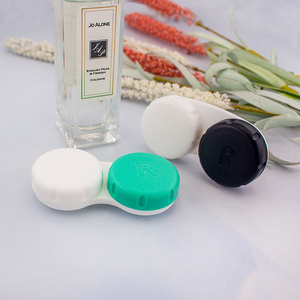
Custom Colored & Clear Daily Disposable Prescription Lenses
Ultra-moist 58% water content hydrogel daily disposables engineered with single-use sterile blister foil and localized Cyrillic packaging cartons.
Contact Us
B2B Digital Lens Ordering & Supply Chain Management Infrastructure
Turnkey digital order management system enabling Russian retail networks to manage bulk prescription parameters, batch tracking, and logistics.
Contact Us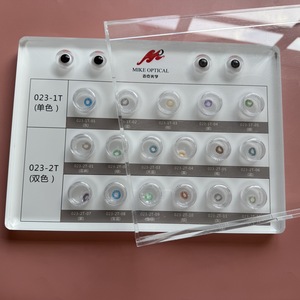
Acrylic Point-of-Sale Store Displays with Dust-Proof Covers
High-durability optical counter display units designed to maximize retail impulse buying for cosmetic lenses and accessories in pharmacy chains.
Contact Us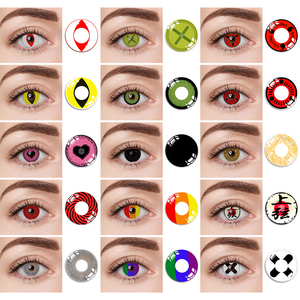
Mill Creek 14.5mm High-Pigment Anime & Cosplay Yearly Lenses
Opaque, vibrant yellow and demon-eye crazy lenses featuring sandwich color technology designed for the thriving Russian youth subculture market.
Contact Us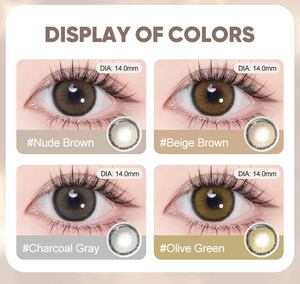
Magister Myopia Prescription Colored Lenses (-1.00 to -10.00 D)
Dual-benefit corrective color lenses combining high diopter accuracy with aesthetic iris enhancement, ideal for optical healthcare chains.
Contact Us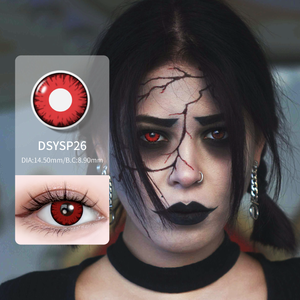
Factory-Crafted Theatrical & Halloween Special Effect Lenses
Fully certified theatrical contact lenses produced with non-ionic polymacon material to prevent protein deposit buildup during extended costume wear.
Contact Us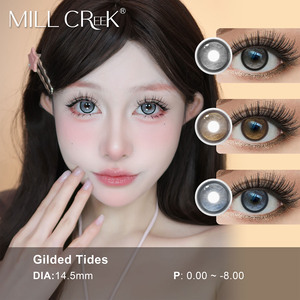
Haipurecon Natural Multi-Tone Iris Enhancing Lenses
Low-MOQ private label collection providing subtle, natural eye shading (Hazel, Azure, Olive) customized for Eastern European ocular aesthetics.
Contact Us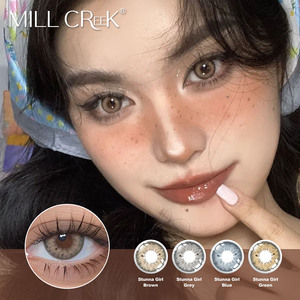
Stunna Series High-Contrast Outer Limbal Ring Lenses
Dramatic soft contact lenses featuring outer limbal ring accentuation to enlarge iris appearance, formulated for high-margin e-commerce sales.
Contact UsThe Russian Contact Lens Supply Chain Landscape & ODM Transition
The contact lens market in the Russian Federation is undergoing a structural transformation. Historically dominated by major Western multinational brands, the market is rapidly pivoting toward high-precision Original Design Manufacturers (ODM) and direct factory alliances. Russian optical chains, pharmacy networks (such as 36.6, Rigla, and Neopharm), and e-commerce leaders (Ozon, Wildberries) face mounting imperative to secure resilient, cost-effective, and fully compliant OEM/ODM manufacturing partnerships. This transition is propelled by three macro factors: the necessity for import substitution, the demand for higher retail gross margins (exceeding 60-70%), and the rapid growth of localized private-label (STS) optical brands.
In this technical whitepaper, we evaluate the Top 10 ODM contact lens manufacturing criteria and factory options for Russia. Navigating this market requires an acute understanding of Eurasian Economic Union (EAC) medical device regulations, microclimate-driven ocular physiology requirements, specialized Cyrillic packaging requirements, and low-temperature shipping logistics across Siberian freight routes. Partnering with a globally verified manufacturer like Kyralens Technology Co., Ltd. allows brand owners to leverage state-of-the-art cast-molding technologies and turnkey regulatory assistance.
Material Science Benchmarks for the Russian Climate
Deploying contact lenses into the Russian Federation requires specialized optical formulations capable of withstanding extreme environmental stressors. Russian winter microclimates create severe challenges for ocular surface maintenance:
Sub-Zero Atmospheric & Radiant Heating Resistance
During Russian winters, outdoor temperatures routinely drop between -15°C and -40°C, while indoor radiator heating reduces ambient relative humidity to under 20%. Standard hydrogel lenses rapidly desaturate, causing corneal friction and Keratoconjunctivitis Sicca (dry eye syndrome). Premium ODM manufacturers solve this by embedding non-ionic wetting agents like Hyaluronic Acid (HA) and Polyvinylpyrrolidone (PVP) directly into the polymer matrix to bind moisture for 16+ hours.
3rd Generation Silicone Hydrogel (High Dk/t)
To maintain corneal health in heavily polluted metropolitan centers (Moscow, St. Petersburg, Yekaterinburg), high oxygen transmissibility (Dk/t > 100) is critical. Third-generation silicone hydrogels eliminate the trade-off between high oxygen flux and low modulus (stiffness). Lenses with a low modulus (<0.5 MPa) prevent mechanical irritation while delivering continuous oxygen flux, reducing hypoxemic corneal edema.
Technical Innovation Note: Sandwich Pigment Encapsulation
For cosmetic color lenses, professional Russian ODM factories utilize 3-layer Sandwich Dot-Matrix Printing Technology. The color pigments are micro-encapsulated inside the biocompatible HEMA polymer layers, ensuring that dye particles never come into direct contact with the wearer's cornea or conjunctiva. This satisfies strict EAC and ISO 10993 cytotoxicity standards.
Localized Application Scenarios in the Russian Federation
Succeeding in the Russian retail optical market requires tailoring ODM manufacturing formulations to specific demographic use cases across major federal districts.
1. Urban Office & Tech Professionals
Demographic: White-collar workers in Moscow City, St. Petersburg, and Innopolis spending 8–12 hours on digital displays under fluorescent lighting.
ODM Solution: Daily disposable silicone hydrogels with blue-light filtering monomers and high-water retainers to combat screen fatigue and indoor dry air.
2. Caucasian & Slavic Iris Enhancement
Demographic: Beauty-conscious consumers seeking subtle, natural color enhancement that blends seamlessly with light brown, hazel, green, or grey eyes.
ODM Solution: Natural-toned 1-tone and 3-tone color lenses with realistic radial iris striations and soft limbal blending ring geometries.
3. Youth Anime & Cosplay Subcultures
Demographic: Gen-Z consumers participating in gaming conventions, cosplay festivals (e.g., IgroMir), and social media content creation.
ODM Solution: High-opacity 14.5mm enlarged diameter crazy lenses (Yellow, Bright Red, Whiteout, Demon Eyes) with yearly replacement schedules and robust protein resistance.
Key Trends Shaping Russian Optical Procurement
Strategic purchasing managers must align their manufacturing partnerships with key market shifts occurring across CIS retail channels:
Russian Contact Lens Market Trends (2025–2030)
Strategic IntelligenceRegulatory Compliance, EAC Registration & Russian Logistics
Exporting contact lenses into the Russian Federation involves strict regulatory hurdles governed by the Eurasian Economic Union (EAEU) and the Federal Service for Surveillance in Healthcare (Roszdravnadzor / Росздравнадзор). A top-tier ODM manufacturer acts as a full compliance partner rather than a passive contract factory.
EAC Medical Device Registration Dossier
Contact lenses are classified as Class IIa or Class IIb medical devices under Russian legislation. Importers must obtain a Registration Certificate (Регистрационное Удостоверение - РУ). Premium ODM partners provide comprehensive technical dossiers, including ISO 13485 certificates, ISO 10993 biocompatibility test protocols, clinical evaluation studies, and sterilisation validation records (ISO 11137 / ISO 17665).
Customs Classification & Thermal Logistics
Contact lenses enter Russia under HS Code 9001300000. Cargo shipped via Trans-Siberian rail or multimodal sea-land routes (via Vladivostok, St. Petersburg, or Novorossiysk) must maintain strict temperature controls. Lenses frozen during transit suffer micro-fractures in the polymer matrix and blister seal rupture. Advanced ODM factories utilize thermal insulation barriers and climate-controlled reefer containers to guarantee batch integrity.
Evaluating the Top 10 ODM Contact Lens Manufacturing Criteria
When selecting a primary ODM manufacturer for the Russian market, procurement heads should benchmark prospective suppliers against ten critical manufacturing dimensions:
Automated Cast Molding
Fully automated cleanroom lines (ISO Class 5 / Class 100,000) ensuring zero human contamination and sub-micron edge polished surface smoothness.
Pigment Encapsulation
Proprietary 3-tone sandwich printing locking bio-safe inks securely inside hydrogel layers to guarantee 0% color leaching.
Dossier Support
Complete provision of technical testing dossiers required for fast-track Roszdravnadzor medical device registration in Russia.
Cyrillic Packaging Engine
In-house graphic localization producing compliant Russian blister packaging, barcode integration, and Russian instruction leaflets.
Flexible MOQ Protocols
Low minimum order quantity structures allowing retail networks to pilot new color lines without excessive upfront inventory risk.
Silicone Hydrogel R&D
Advanced material formulations offering low modulus (<0.5 MPa) paired with high oxygen permeability (Dk/t > 100).
Thermal Shock Testing
Rigorous accelerated aging and thermal stability testing (-20°C to +50°C) to ensure blister seal integrity across freight corridors.
Complete Shelf Solutions
Cross-category manufacturing capabilities covering contact lenses, lens cases, multipurpose disinfectant solutions, and lubricating eye drops.
Lot Traceability Systems
Digital batch identification allowing instant tracking from monomer chemical synthesis to final blister retail packaging.
Eurasian Account Support
Dedicated international trade teams trained in Russian trade terms (FOB, CIF, DDP Moscow) and localized client communications.
Why Kyralens is the Strategic ODM Partner for Russia
Kyralens Technology Co., Ltd. stands as a premier global wholesaler and specialized ODM developer for private-label eye care products. We serve leading pharmacy chains, optical retailers, and online distributors across Europe, the Middle East, and Asia. Our core value proposition centers on empowering B2B buyers to build high-margin, distinctive private label brands without operational friction.
Full Category Shelf Coverage
Rather than dealing with multiple disparate factories, Kyralens supplies your entire optical shelf under a single coordinated supply chain: clear disposables, cosmetic color lenses, disinfectant solutions, lubricating eye drops, custom lens cases, and reading glasses.
Precision Engineering & QC
Our state-of-the-art automated manufacturing lines use sub-micron mold tooling to produce consistent base curves and ultra-smooth lens edges. Every production lot undergoes automated optical power verification and 100% sterile barrier inspection.
End-to-End Regulatory Management
We provide complete technical documentation packages, international certificate authentications, and labelling compliance reviews for destination markets, ensuring seamless entry through Russian customs and healthcare audits.
Frequently Asked Questions by Russian B2B Buyers
Detailed answers to technical, regulatory, and logistics queries from procurement directors and brand managers in Russia and the CIS region.
QWhat is the process for registering ODM contact lenses with Roszdravnadzor in Russia?
To sell contact lenses legally in Russia, products must obtain a Registration Certificate (РУ) from Roszdravnadzor. As your ODM manufacturer, Kyralens prepares the full technical registration dossier. This includes ISO 13485 certificates, ISO 10993 biocompatibility test reports, manufacturing cleanroom audits, clinical evaluation summaries, and sterile barrier shelf-life stability data. Our regulatory team coordinates directly with your designated Russian legal representative (Уполномоченное изготовителем лицо) to ensure smooth dossier submission.
QHow do you protect contact lens shipments from freezing during Siberian transit?
Winter freight transport through northern Russian territories presents severe temperature challenges. Freezing causes blister saline expansion, which can damage the delicate polymer matrix or compromise the sterile foil seal. We utilize multi-layer thermal insulating foil wraps inside master transport cartons and recommend climate-controlled reefer containers (maintaining +5°C to +25°C) for trans-Siberian rail or road transit. Additionally, our hydrogel formulas undergo frozen-thaw stability testing (-20°C for 72 hours) to verify structural resistance.
QWhat are the Minimum Order Quantities (MOQs) for custom Cyrillic private label packaging?
MOQs depend on the product category and degree of customization. For clear daily or monthly contact lenses using standard diopter power distribution, private label outer carton printing typically starts at 3,000 to 5,000 boxes per SKU. For custom cosmetic color lens series, we offer flexible pilot batch options starting as low as 1,000 units per color shade, allowing Russian retail chains to test new market concepts before committing to high-volume production rollouts.
QWhat packaging and labeling elements are mandatory for the Russian market?
Russian medical device labeling rules mandate that the retail box and instruction leaflet contain clear Cyrillic text detailing: product trade name, manufacturer identity and address, Russian authorized representative details, registration certificate number (РУ number), expiration date, lot batch number, diopter power (D), base curve (BC), diameter (DIA), and storage condition warnings. Kyralens provides complete artwork layout reviews before final plate printing.
QWhy prefer Silicone Hydrogel over standard HEMA for the Russian market?
While HEMA (hydroxyethyl methacrylate) hydrogel is cost-effective and suitable for short cosmetic wear, 3rd-generation Silicone Hydrogel provides up to 5 times more oxygen to the cornea (Dk/t > 100 vs Dk/t ~ 20 for HEMA). In Russia's dry, heated indoor winter environments, silicone hydrogel resists surface dehydration, reduces protein deposit buildup, and enables safe all-day wear (12-16 hours) without causing ocular hyperemia (red eyes).
Launch Your Enterprise Private Label Line in Russia
Partner with a proven ODM manufacturer to engineer custom contact lens formulations, certified packaging, and reliable Eurasian supply chains tailored to your business goals.